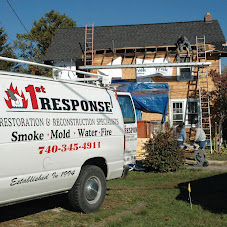
Showing posts with label perry county. Show all posts

Friday, March 16, 2012


While everyone else is gone for the weekend...we are here for you 24/7. 

If disaster should strike you, your friends, your family....CALL 1st RESPONSE! 


(740) 345-4911

and we will take it from there.

Tuesday, February 28, 2012

Services at 1st Response


FIRE AND SMOKE DAMAGE RESTORATION-

A fire can result in complex damages due to the unique behavior of smoke. 1st Response needs to survey the site to determine the extent to which fire, smoke, heat and moisture impacted the building materials and contents. Hidden damage and odor results when smoke penetrates cavities of the structure. Professionals will be able to investigate how far smoke damage may have spread. Identifying the type of soot present at the site will also reveal what type of damage has occurred.

WATER REMOVAL AND DEHUMIDIFICATION-

1st Response will have the equipment and experience necessary to effectively dry, deodorize and disinfect areas flooded or damaged by water. Prepared with an array of hi-tech drying equipment, sanitizing agents, germicides and anti-microbial treatments, 1st Response will be able to efficiently remove water. They will also have vast knowledge regarding dehumidification and properly lowering moisture levels from your home.

MOLD MITIGATION AND REMEDIATION-

Unwarranted amounts of mold may present health concerns to you and your family. Previous and untreated water damage can cause mold growth which is another good reason to have any water damage properly treated. Mold mitigation is a carefully regulated procedure and needs to be treated promptly and properly. Improper mold remediation can damage the resale value of your home.

OTHER SERVICES OFTEN INCLUDE-

catastrophic storm response; electronic equipment; document drying; contents claim inventory service; air duct and HVAC cleaning; biohazard, crime scene and vandalism clean up; carpet, upholstery, drape and blind clean up; ceiling, wall and hardwood floor clean up; and deodorization.

Friday, July 22, 2011

Some HOT Weather Suggestions

Fans and Ceiling Fans


If you’re looking for ways to beat the heat, a ceiling fan can be a great investment for your home. This one appliance can make a room feel 6 or 7 degrees cooler, and even the most power-hungry fan costs less than $10 a month to use if you keep it on for 12 hours a day. Good fans make it possible for you to raise your thermostat setting and save on air-conditioning costs. Fans don’t use much energy, but when air is circulating, it feels much cooler. Ceiling fans are best, but a good portable fan can be very effective as well.

You should remember that even mild air movement of 1 mph can make you feel three or four degrees cooler. Also make sure your ceiling fan is turned for summer – you should feel the air blown downward.

Shades, drapes, or blinds

Install white window shades, drapes, or blinds to reflect heat away from the house. Close blinds, shades and draperies facing the sun (east-facing windows in the morning and west-facing windows in the afternoon) to keep the sun’s heat out and help fans or air conditioners cool more efficiently. Always remember that the best way to keep your home cool is to keep the heat out.

Internal Heat

The most common sources of internal heat gain are; appliances, electronic devices, and lighting. Be aware from where the heat is comming. Now if you have air conditioning, use it wisely. Don’t put lamps, televisions or other heat-generating appliances next to your air-conditioning thermostat, because the heat from these appliances will cause the air conditioner to run longer. The heat they produce will make it think your house is warmer than it really is, and your system will run harder than it needs to.

•Unless you absolutely need them, turn off incandescent lights and heat-generating appliances. Replace incandescent bulbs with compact fluorescents; they produce the same light but use a fifth the energy and heat.

•You should also try to avoid heat-generating activities, such as cooking, on hot days or during the hottest part of the day. If you are cooking, use your range fan to vent the hot air out of your house. By reducing the amount of heat in your home, you will have to use less energy to cool it.

Other things to remember

Humidity makes room air feel warmer, so reduce indoor humidity. Minimize mid-day washing and drying clothes, showering, and cooking. And when you must do these things, turn on ventilating fans to help extract warm, moist air.

Avoid landscaping with lots of unshaded rock, cement, or asphalt on the south or west sides because it increases the temperature around the house and radiates heat to the house after the sun has set.

If the attic isn’t already insulated or is under-insulated, insulate it NOW. Upgrading from 3 inches to 12 inches can cut cooling costs by 10 percent.

Monday, December 6, 2010

Some Winter Tips

Keep your headlights clear with car wax! Just wipe ordinary car wax on your headlights. It contains special water repellents that will prevent that messy mixture from accumulating on your lights - lasts 6 weeks.


Squeak-proof your wipers with rubbing alcohol! Wipe the wipers with a cloth saturated with rubbing alcohol or ammonia. This one trick can make badly streaking & squeaking wipers change to near perfect silence & clarity.

Ice-proof your windows with vinegar! Frost on it's way? Just fill a spray bottle with three parts vinegar to one part water & spritz it on all your windows at night. In the morning, they'll be clear of icy mess. Vinegar contains acetic acid, which raises the melting point of water---preventing water from freezing!

Prevent car doors from freezing shut with cooking spray! Spritz cooking oil on the rubber seals around car doors & rub it in with a paper towel. The cooking spray prevents water from melting into the rubber

Fog-proof your windshield with shaving cream! Spray some shaving cream on the inside of your windshield & wipe if off with paper towels. Shaving cream has many of the same ingredients found in commercial defoggers.

De-ice your lock in seconds with hand sanitizer! Just put some hand sanitizer gel on the key & the lock & the problems solved!
 
1st Response

Friday, December 3, 2010

Some good Winter tips from 1st Response

Keep your headlights clear with car wax! Just wipe ordinary car wax on your headlights. It contains special water repellents that will prevent that messy mixture from accumulating on your lights - lasts 6 weeks.


Squeak-proof your wipers with rubbing alcohol! Wipe the wipers with a cloth saturated with rubbing alcohol or ammonia. This one trick can make badly streaking & squeaking wipers change to near perfect silence & clarity.

Ice-proof your windows with vinegar! Frost on it's way? Just fill a spray bottle with three parts vinegar to one part water & spritz it on all your windows at night. In the morning, they'll be clear of icy mess. Vinegar contains acetic acid, which raises the melting point of water---preventing water from freezing!

Prevent car doors from freezing shut with cooking spray! Spritz cooking oil on the rubber seals around car doors & rub it in with a paper towel. The cooking spray prevents water from melting into the rubber

Fog-proof your windshield with shaving cream! Spray some shaving cream on the inside of your windshield & wipe if off with paper towels. Shaving cream has many of the same ingredients found in commercial defoggers.

De-ice your lock in seconds with hand sanitizer! Just put some hand sanitizer gel on the key & the lock & the problems solved!

Friday, November 19, 2010

More Winterizing Tips

WINDOWS AND DOORS:


Check windows and doors to prevent air from seeping into your home.

Checking for air gaps is done best on a windy day because you will be able to feel where the drafts are more easily. Light a few incense sticks and run them around door and window openings, watch the smoke trail and if there is a leak it will be real easy to spot.

A small 1/4" gap at the threshold of a door is equal to a 4" hole in the wall!

The rubber insert on thresholds tends to get hard and brittle with age and they tend to collapse so it may be time to replace it.. Most thresholds can simply be removed and a new rubber insert threaded in.

Don't overlook your wall outlets, its amazing how much outside air comes in around the openings.

Quick Fix: Install foam precut pads in behind the plates. Most all home building centers and hardware stores carry them.

Use a good quality caulking compound and seal up any cracks between the side walls of the house and the window frames. Clean and lubricate the window frame channels, if there are any gaps you can seal with one of the many strip adhesive backed weatherstrip available at local home centers and hardware stores.

Clean gutters & downspouts.Check the gutter supports.

Exterior paint-check for peeling, holes, cracks,soft and rotten wood, chalking.

Check siding-hammer in nails that have popped, replace rusty nails with galvanized nails.

Caulk any leaks or cracks in basement walls and seal.

See that all doors and windows close & lock properly. Lubricate hinges and door locks.

Thursday, October 21, 2010

Winter will be here soon

Winter may be a few months away, but now is a great time to start getting ready for it. With energy prices on the rise, it is important to find ways to cut costs and reduce the amount of energy you use in the winter. Let’s go over a few quick ways to help lower your energy costs and get ready for winter.


First, one of the easiest ways to dramatically reduce your home heating costs is by sealing your windows. There are many different kinds of window kits available that will completely seal off any gaps or drafts. Summertime is a great time to purchase these kits since they will typically be marked down by 50% or more. This means instead of spending $5 or more per window, you can do it for about $2.50 a window. If you’ve got a lot of windows in your home, this can really add up.

Summer is also a good time to start thinking about your insulation and the shape it may be in. If your home is fairly new, you should not have to worry about this. However, if you have noticed that no matter what you do your house still feels pretty cold, poor insulation may be the culprit. Look at the R rating on your current insulation and double check to make sure that it is meant for your area. If it is, it may have degraded, or you may need a little more to make your house feel cozy.

If you have a forced air heating system, it’s time to get those filters out and replaced. Having a clean filter in your furnace can reduce your heating costs significantly. Once again, you can take advantage of summer discounts and stock up on filters for the entire year. You should be replacing them at least every month, or more if you live in a particularly dusty area.

Wednesday, July 7, 2010

Some tips for summer living

Light and Airy - Make your home as light as possible. Invest in some thin and sheer curtains that look beautiful, provide privacy and keep the room cool. Heavy, synthetic drapes are definitely a no-no in the summer months. Beautiful cotton drapes in bold patterns and bright colors look good.

Cool Colors - Furnish your home in cool and soothing colors. Use bed sheets and pillow cases in colors like white, crème, yellow, blue, orange etc. Bed spreads and table cloths in vibrant patterns and flowery prints create a airy and relaxed atmosphere in the summer months.

Simplicity - Put away all your heavy and thick carpets that look and feel hot. Instead, invest in small and thin rugs that look good and feel great. Remember - less is more in summers!

Bring Nature to your Home - Seasonal flowers can brighten up your home. Pick flowers from your garden or invest in some fresh flowers for all the rooms of your home. Small, green plants create a cooling effect in your home.

In the afternoons, draw all the curtains of your house. This will automatically cool off the home and keep the heat out.

If you don't already have them, go shopping for some cheery wind chimes. Hang them at the entrance or high up where there is a cross ventilation. Let your home come to life with the soothing sounds of the chimes.

I you should suffer fire damage, smoke damage, water damage or storm damage, remember 1st Response.

Friday, June 18, 2010

Going Away??

If you are going on a week-end trip, business related trip, or a well deserved vacation you don't only need a "things-to-remember" list, but also a "Home To-Do List" as well. You do not want to find yourself in the middle of a business meeting, on the nice sunny beach or even just a 100 or so miles away when you get that panic feeling of "did I forget... did I remember... to do this, to do that?", pay that due bill, leave fresh water and food for the cat, etc.


So, when leaving, make these 4 tasks complete before you go, and also check out our time saving ideas as well.

It is highly suggested that you utilize automatic light timers that work just as well on radios, televisions, to make the home looked lived-in, like you are not away. Stop newspaper delivery for the time you are away, these piled up on your doorstep or end of driveway can be a real sign that your home is empty and no one is there, leaving you wide open and vulnerable. Mail too can be held at your local post office and resume delivery when you return home.

You can also use auto pay for your important bills. Pay utilities online so that the payment will be made via internet through your account, so you can rest assured that you do not miss a payment and a bill is not awaiting your return. You can even call your payments in using your Master or Visa card, and it is a secure way too. By taking the one-time payment option you can assure you will only be charged this one time while you are away enjoying yourself.

Not only do you have to make arrangement for your pets, but your plants as well. You can hire someone to water them or put them near your automatic sprinkler system if you have one. If you must leave your pets at home, make sure you ask a neighbor who is reliable and can feed and give them water daily. I also suggest they have their own vehicle to transport the pets in case of an emergency.

To save on some of the energy billing and reducing costs, turn off gas and water, unplug some of the appliances like the microwaves, televisions and other ones that you will not be utilizing. This also reduced the danger of power surges if you should experience a power outage while you are away. If you have gas stoves, turn off the pilot lights to save even more while you are gone.

There tips, as little as just paying a bill ahead of time, or using auto bill pay to putting lights on automatic timers can save you much stress and anxiety while being away from your home and assuring that your home and pets will be safe upon your return.

Tuesday, April 13, 2010

Summer Tips

Some handy tips from 1st Response, when an emergency arises, think of 1st Response, a Full Service Contractor

Furniture Care
Outdoor tables, chairs, and lawn chaises are built from materials that are generally tough enough to withstand sun, rain, and wind. Day to day, they require little more than frequent hosing off. Specialized care is required, however, when stains, scuffs, and scrapes appear. In many cases, cleaners and waxes designed for the care of cars, boats, and decks are appropriate for use on outdoor furnishings. At the end of the season, cover outdoor furnishings with canvas or cotton sheeting to keep them free of dust and protected from moisture. Store the furniture in a shed, a garage, or on a covered porch. Or, if it can't be kept in a protected area, wrap it well in waterproof tarps designed for outdoor storage of furniture.

Fabric
Outdoor woven fabrics generally undergo a chemical treatment during manufacturing to increase stain and moisture resistance, regardless of whether they are made from synthetic fibers, such as vinyl-coated polyester or acrylic, or from cotton blends.

Once a week, hose fabrics down to remove dust, dirt, and body oils. To deep clean, scrub with a utility brush and a solution of mild soap, such as Dr. Bronner's, and lukewarm water. Avoid detergents and hot water, which can strip the protective coating off of outdoor fabrics. If fabrics are badly stained or mildewed, scrub with a solution of 1/ 2 cup oxygen bleach and 5 gallons of warm water.

Cushions
Store all outdoor cushions in a covered area to protect them from rain. If cushions become wet, stand them on end to expedite drying.

Umbrellas
Rinse regularly with a spray hose throughout the outdoor season, or all year if you live in a warm climate or humid environment. If mildew is present, remove the cover from the frame, if possible, and brush away any mildew.

If the label says "machine-washable," place it in a washing machine filled with cold water and a cup of oxygen bleach. Agitate to mix and let the cover sit overnight. Next, drain the water and spin, then launder the cover in cold water using mild soap such as Dr. Bronner's. Return it to the frame, in the open position, to dry in the sun.

Awnings
Rinse regularly with a spray hose throughout the outdoor season. Allow the awning to air-dry thoroughly after cleaning; always open awnings after rain to let them dry thoroughly. For a deep cleaning, first rinse the awning, then use a long-handled brush to apply a solution of water and mild soap, such as Dr. Bronner's. Rinse again. Clean awnings thoroughly and let them dry completely before storing. Store awnings off the ground to lessen the chance that they will become winter homes for rodents.

Driveways, Walks, and Patios
Although driveways and walks are utilitarian, they are extensions of the home, and one of the first things people see when entering your property. Regular care of these areas will prevent them from becoming damaged or unsightly. Sweep weekly with an outdoor push or corn broom or rinse with a hose to keep surfaces clean.

Routine care of Decks

Every week, sweep deck floors and thresholds with an outdoor push broom (or more frequently, if necessary) to remove leaves and other debris. Dust railings and windowsills with a counter brush.

Always shovel your deck after snowstorms. The weight of snow can damage the deck and the excess moisture can harm untreated wood.

Seasonal Maintenance

To wash a deck by hand, first sweep thoroughly and use an old saw blade or putty knife to remove any debris caught between the boards. Next, hose down the deck and scrub it with a long-handled deck brush and a solution of all-purpose cleaner and water, working in strokes that run parallel to the grain of the boards. For tough stains, use a commercial deck brightener or oxalic acid, which lighten dingy, gray wood.

If you have a large deck or porch, a power washer saves time. This machine uses high-pressured water to blast away dirt, mildew, and some stains. However, power washers can open the pores in untreated wood surfaces, exposing the surface to the elements and decreasing the deck's life span.

Once the deck is clean, check for wobbly nails that may have come loose over the winter. Remove them, and replace with galvanized, all-purpose deck screws, which are less likely to pop out of wood than nails are. Fill holes with wood filler, and sand smooth. Carry out any other repairs, such as replacing a splintered or warped board, before the damage worsens.

Once a year (or when drops of water no longer bead on the surface but are absorbed into the wood), coat the deck with a water-based waterproofing sealer. Choose a sealer that contains a UV protector to help block the sun's damaging ultraviolet rays.

If an EMERGENCY arises, 1st Response is just a phone call away. 24/7 Personal Care.

Tuesday, March 16, 2010

Getting Rid of Water Damage

If your home is ravaged by water damage, here are some things you can do to fix the situation.

•Find the source of the water and fix it. Most often, water damage comes from leaks from pipes or drainage. Get yourself one of those cement glues specifically made for covering up leaky pipes and you should do fine. Remember to turn off your water source first before trying to find and fix the leak.

•Get rid of any excess water. You can do this by simply mopping the entire wet area. If mops don't work, then try using a vacuum cleaner. Do this as quickly as possible. The faster you can clean the water up, the less likely it is mold and mildew will develop. If the water damage is particularly large, take pictures of the damage prior to cleaning it up for the insurance company to cover.

•Let in proper ventilation or turn up the air conditioner. Doing so will prevent the growth of molds and mildew. Proper ventilation will also cause cloth or cloth-like fibers to dry faster if the water damage has affected them.

Call in the professionals. The best way to get rid of water damage is to hire professional cleaners. They will assure that your home and furniture will be handled with the utmost care.

Water damage to your house should never be taken lightly. Your house is one of your biggest investments. You should take care of it so it will remain standing, clean, and intact.

Thursday, January 14, 2010

Winter Advice

An average of a quarter-million families have their homes ruined and their lives disrupted each winter, all because of water pipes that freeze and burst.

And recovering from frozen pipes is not simple. An eighth-inch (three millimeter) crack in a pipe can spew up to 250 gallons (946 liters) of water a day. Both plastic (PVC) and copper pipes can burst.

By taking a few simple precautions, you can save yourself the mess, money and aggravation frozen pipes cause.

Before the cold hits (almost too late for this, but WINTER is not over...
Insulate pipes in your home's crawl spaces and attic. These exposed pipes are most susceptible to freezing. Remember - the more insulation you use, the better protected your pipes will be.

Heat tape or thermostatically-controlled heat cables can be used to wrap pipes. Be sure to use products approved by an independent testing organization, such as Underwriters Laboratories Inc., and only for the use intended (exterior or interior). Closely follow all manufacturers' installation and operation instructions.

Seal leaks that allow cold air inside near where pipes are located. Look for air leaks around electrical wiring, dryer vents and pipes. Use caulk or insulation to keep the cold out and the heat in. With severe cold, even a tiny opening can let in enough cold air to cause a pipe to freeze.

Disconnect garden hoses and, if practical, use an indoor valve to shut off and drain water from pipes leading to outside faucets. This reduces the chance of freezing in the short span of pipe just inside the house.

When the mercury drops
A trickle of hot and cold water might be all it takes to keep your pipes from freezing. Let warm water drip overnight, preferably from a faucet on an outside wall.

Open cabinet doors to allow heat to get to uninsulated pipes under sinks and appliances near exterior walls.

Before you go away
Set the thermostat in your house no lower than 55°F (12°C).

Ask a friend or neighbor to check your house daily to make sure it's warm enough to prevent freezing or

Shut off and drain the water system. Be aware that if you have a fire protection sprinkler system in your house, it will be deactivated when you shut off the water.

If your pipes freeze
Don't take chances. If you turn on your faucets and nothing comes out, leave the faucets turned on and call 1st Response. If you detect that your water pipes have frozen and burst, turn off the water at the main shut-off valve in the house; leave the water faucets turned on. (Make sure everyone in your family knows where the water shut-off valve is and how to open and close it.)

Never try to thaw a pipe with a torch or other open flame. Water damage is preferable to burning down your house. You may be able to thaw a frozen pipe with the warm air from a hair dryer. Start by warming the pipe as close to the faucet as possible, working toward the coldest section of pipe. Do not use electrical appliances in areas of standing water because you could be electrocuted.

Thursday, December 17, 2009


1st Response covers six counties in Central Ohio. They are Knox, Coshocton, Licking, Muskingum, Fairfield and Perry.

WE ARE A FULL SERVICE CONSTRUCTION COMPANY

Fire and Smoke Damage


Smoke and Odor Removal
Cigarette Smoke
Smoke from Fires
Skunk Odor
Structure Repair
Temporary Board-up
Structure Cleaning
Drywall Repair
Painting
Cleaning and Restoration
Office Furniture
Carpet
Upholstery
Drapery
Total Content Cleaning

Water Damage

Water Extraction
Drying Dehumidification
Interior Wall Drying
Mold and Mildew Odor Removal
And Containment

Carpet Restoration
Cleaning and Deodorization
Carpet Pad Removal and
Replacement
Carpet Replacement

Repair and Reconstruction
Base Removal and Replacement
Drywall Repair and Replacement
Stain Removal
Specialty

Electronic Equipment Restoration
Stain Removal
Fine Arts Restoration
Document Restoration

Followers